
Designing Candidate Homepages
That Build Voter Trust
In modern politics, you rarely get a second chance at a first impression. When an undecided voter, local reporter, or donor lands on your homepage, you have only a few seconds to prove your campaign is built to win. That's why smart political campaign website design isn't about looking pretty. Instead, it's about earning trust fast.
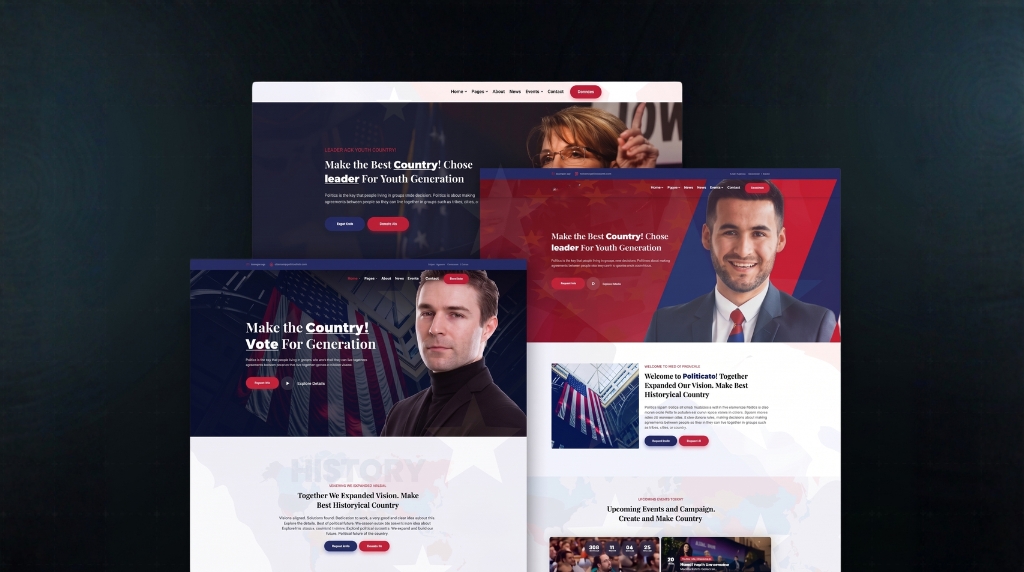
After all, your website isn’t a digital bumper sticker or a place to drop social media links. It’s your digital headquarters. At a glance, it tells voters, donors, and press whether your team is organized, capable, and ready to win.
So what does a trust-building homepage actually look like? Below, we’ll walk through how winning campaigns across the country design homepages that build real trust and deliver real results.
1. Make the Top of the Page Count
First, focus on the top section of your website, meaning everything a visitor sees before they start scrolling. This small area decides whether they stay or click away.
Start by saying who you are and what you stand for. Skip the vague slogans and put a clear headline front and center that names the candidate, the office, and their main goal for the community. For example, “Maria Lopez for State Senate: Lower Costs for Working Families” tells a voter everything in one line.
Next, use real photos from the campaign trail. Stiff studio portraits and generic stock images feel distant. In contrast, photos of your candidate at town halls, knocking on doors, or listening to voters make them instantly relatable.
Finally, give visitors two clear choices. Ten different links will only overwhelm people. Instead, offer two main buttons right away: Join the Campaign and Donate.
2. Keep Things Simple for Undecided Voters
Once a visitor decides to stay, the next challenge is keeping their attention. Most voters won’t read a 10-page policy paper on your homepage. Rather, they want quick, direct answers about the issues that affect their lives, and if they can’t find them in a couple of clicks, they leave.
To solve this, highlight three or four core issues. Simple cards or short sections work best. Keep each summary brief, and then link to a full issue page for voters who want the details.
Just as important, build for phones first. Most of your traffic will come from people tapping links on their phones, whether from a text blast, a social post, or a quick Google search. As a result, a site that’s slow or hard to read on a small screen quietly costs you voters every day.
High-contrast colors and clear typography also make your site easier to read for older voters and people using screen readers. Following the WCAG accessibility guidelines helps reduce the risk of ADA accessibility complaints.
Beyond that, speak every voter’s language. If your district has large Spanish-speaking or other language communities, offer a real translated version of your key pages. Automatic translation widgets often feel clumsy, whereas a proper translation shows genuine respect for every part of your district.
Want a candidate website that’s built right from day one? See how Global Leaders builds websites for community leaders.
3. Show Local Backing and Momentum
Clear messaging gets voters interested, but social proof is what earns their trust. Before backing a candidate, people look for trusted local voices.
For this reason, put key endorsements up front. Display logos and quotes from trusted local unions, community leaders, elected officials, organizations, and newspapers near the top of the page.
At the same time, highlight your grassroots energy. Share real proof of progress, such as the number of individual donors, volunteer hours, or doors knocked. Metrics like these prove your candidate has real momentum building on the ground.
4. Turn Interest into Real Campaign Support`
Of course, winning over a voter is only step one. From there, a good homepage makes it effortless for that voter to take action.
First, keep your sign-up forms short. Nobody wants to share their life story, so ask only for an email address and a ZIP code. The simpler the form, the more people will fill it out. Also, if you collect phone numbers for text updates, include a clear opt-in consent line.
Similarly, make donating effortless. Every donate button should go straight to your ActBlue or WinRed page with no lag or confusing extra steps. After all, every extra click costs you contributions.
Lastly, don’t forget the legal basics. Add a clear “Paid for by” disclaimer in your footer and link to a privacy policy near every sign-up form. Federal Election Commission rules require disclaimers on campaign websites, and most states have their own versions. Missing these details draws scrutiny from both voters and election regulators.
5. Get Found When Voters Ask AI
Even a perfectly designed homepage can’t help if voters never find it. Today, more voters research candidates by asking ChatGPT, Gemini, Perplexity, or Google’s AI Overviews instead of scrolling through search results. Unfortunately, if your website isn’t structured for these tools, AI may pull your story from opponents, old news, or outdated sources.
The good news? This is entirely fixable. A campaign website built with proper schema markup and structured data helps AI engines clearly understand who your candidate is, what office they’re running for, and where they stand on the issues.
How Global Leaders Helps Candidates Win Online
A polished template might look okay, but a winning candidate site needs to feel authentic, earn trust, and get found. That’s exactly where Global Leaders comes in.
We build human-crafted websites for leaders who want to be seen, trusted, and recommended, so that you can focus on winning votes. Here’s how we help your campaign:
Human-Crafted, Never Automated: Every site is handcrafted by experienced designers and developers, never spun up by cookie-cutter algorithms. As a result, your website tells your candidate’s story in a way that feels real to voters.
Built to Be Found by AI and Google: We build every site with schema markup and structured data, so ChatGPT, Gemini, Perplexity, and Google AI can find, read, and recommend your candidate.
Launch-Ready in 48–72 Hours: Fast-track your campaign with a high-performance site delivered within 48 to 72 hours of completing our simple setup form.
Everything Handled for You: Our team sets up your domain, hosting, and email. In short, your complete website is ready to go without you lifting a finger.
Quick Look: Site Features vs. Real Campaign Impact
|
What We Build |
Why It Matters |
What It Does for the Candidate |
|
Human-Crafted Design |
Voters can tell a template from a real story |
Builds authentic trust from the first click |
|
AI-Visible Structure |
Voters now research candidates through AI tools |
Helps AI recommend your official platform |
|
48–72 Hour Delivery |
Campaign timelines are tight |
Gets you online before the race heats up |
|
Domain, Hosting & Email Setup |
No tech headaches for your team |
Frees your staff to focus on voters |
Frequently Asked Questions
A strong candidate homepage should include a clear headline with the candidate's name and office, real campaign photos, and two main buttons (Join and Donate). In addition, it should feature three or four core issues, key endorsements, a short sign-up form, and a "Paid for by" disclaimer.
Yes, absolutely. Most voters reach campaign sites by tapping links in text messages, social posts, or search results on their phones. Therefore, a site that's hard to use on a small screen loses both voters and donations.
Yes. FEC rules require political committee websites to include a disclaimer identifying who paid for the site, and many states have similar rules for state and local races. Requirements vary by state, so verify the exact wording with your election office or campaign attorney.
Start by building your campaign website with schema markup and structured data. Then, keep your issue pages clear and up to date, and make sure your official site is the most complete source of information about your candidate. As a result, AI tools are more likely to recommend your platform instead of third-party sources.
Get a custom candidate site live in 48–72 hours after submitting your form, with domain management, secure hosting, and email configuration fully managed by Global Leaders.
Ultimately, your political campaign website design will either be a silent liability or one of your candidate's most powerful assets for fundraising and voter outreach. So why leave it to chance? Let Global Leaders build a human-crafted, AI-visible website that protects your candidate's image and helps voters find the real story.
Talk to Global Leaders today and get your campaign website live in 48–72 hours.
This article is for general information only and is not legal advice. Please confirm election and accessibility requirements with your campaign’s legal counsel or state election office.


